Land clearing in North Carolina costs between $1,200 and $6,000 per acre in 2026. That’s not a typo — the range is that wide, and the difference comes down to what’s actually on your land. Here’s what to expect before you call a contractor.
If you’ve ever gotten two wildly different quotes for the same clearing job, you’re not alone. A client in Cumberland County came to 3B Site Development after receiving bids of $1,800 and $6,400 for the same three-acre tract. Both contractors were legitimate. Both were looking at the same property. The difference? One quoted for light brushwork. The other actually walked the back half of the lot — a dense stand of loblolly pines with decades of root growth underneath.
That gap is normal in North Carolina, and it reveals the most important truth about land clearing: the price isn’t about acreage, it’s about what’s on the acres.
What Land Clearing Actually Involves
Land clearing is the process of removing trees, brush, stumps, debris, and vegetation from a parcel to prepare it for a new use — whether that’s a home site, a driveway, a pond, or a farming operation.
Depending on your land’s condition, a clearing project might include tree felling and removal, stump grinding or extraction, forestry mulching, grading, debris hauling, and erosion control installation. Some projects call for one or two of these services. Others need all of them. That’s why land clearing services aren’t one-size-fits-all — and why every responsible contractor should walk your property before quoting.
Pro Tip: If a contractor quotes you over the phone without seeing the property, that number will change. Always request an on-site estimate before committing to a project price.
Land Clearing Methods Used in North Carolina
North Carolina’s varied landscape — from the Sandhills region around Fayetteville to the Piedmont and coastal flatlands — means different methods work better depending on your terrain and goals.
Forestry Mulching uses a single machine to grind vegetation directly into the soil. It’s fast, leaves a protective mulch layer, and doesn’t require separate debris hauling. It works well for brush-heavy parcels where you’re not immediately grading. If you want to avoid a full forestry tilling service but still need dense undergrowth removed, forestry mulching is often the most cost-effective starting point.
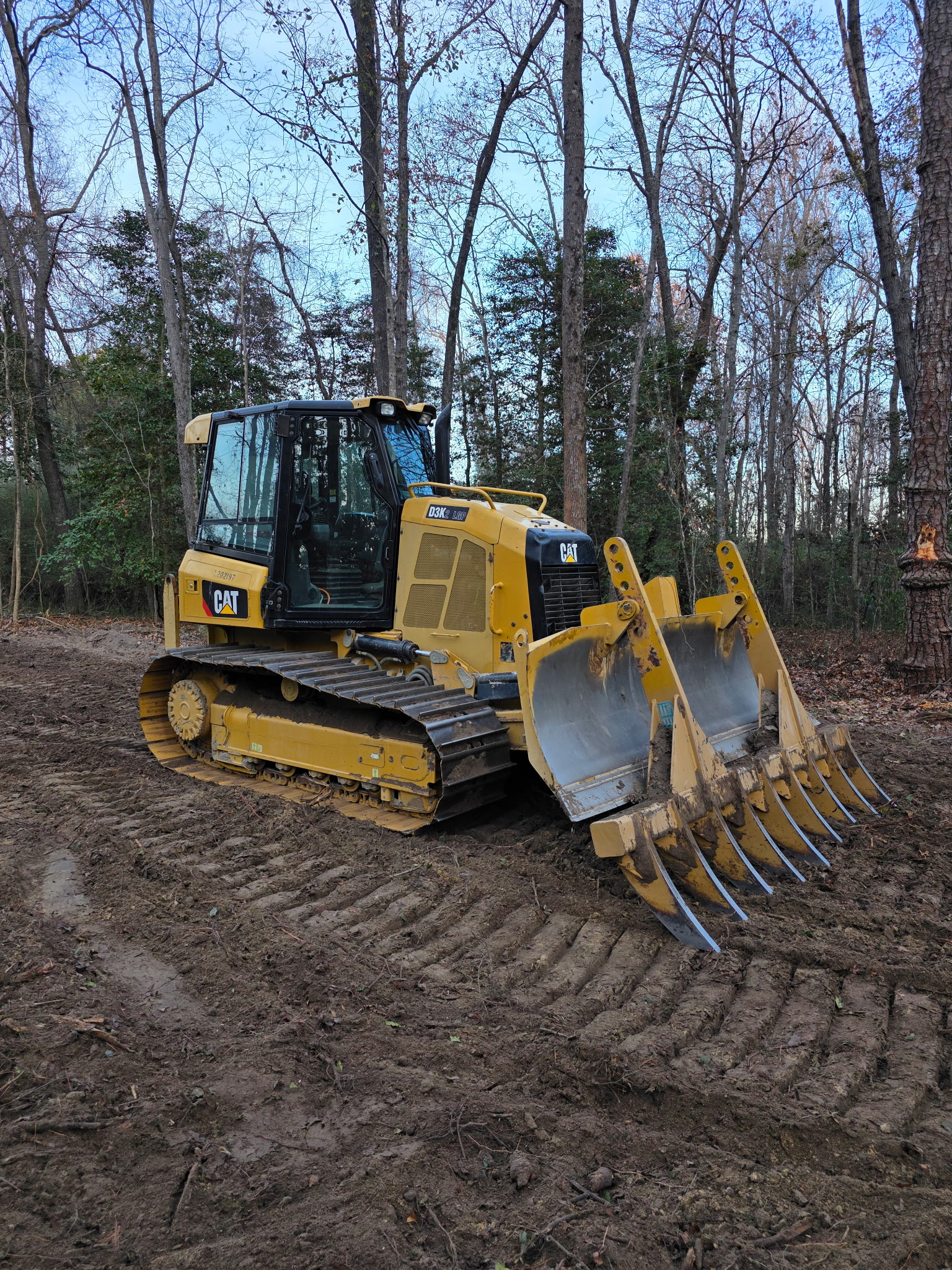
Mechanical Clearing involves equipment like excavators, bulldozers, and skid steers pushing over trees and scraping the land. It’s the right call for heavily wooded properties or sites where you’ll be grading immediately after. The trade-off is more debris to haul, which adds cost.
Selective Clearing removes specific trees or sections while leaving others standing. This approach is common for homeowners who want to preserve mature hardwoods or maintain a privacy buffer. It takes more time per acre but preserves landscape value.
Cut and Grind involves felling trees with a chainsaw crew and then grinding stumps separately. It gives you more control over which trees come down and is often the best option for properties with large, high-value timber that might be worth salvaging.
Did You Know? In some cases, timber on your NC property can be sold before clearing begins — offsetting a portion of your project cost. This is most viable on large tracts (10+ acres) with mature pine stands, but it’s worth asking about before work starts.
What Land Clearing Costs in North Carolina in 2026
Based on current market data, North Carolina land clearing costs in 2026 range from $1,200 to $6,000 per acre, depending on site type and vegetation density. Farmonaut®
Here’s how terrain type typically affects pricing in central NC:
| Land Type | Typical Cost Per Acre |
| Open field / light brush | $1,000 – $2,000 |
| Mixed brush with some trees | $1,500 – $3,500 |
| Dense woods / hardwoods | $2,500 – $6,000 |
| Rocky or slope-heavy terrain | $4,000 – $6,000+ |
Clearing 1 acre of land takes anywhere from two to 12 hours for a professional team, depending on what they’re removing. Angi Hourly rates for land clearing contractors in the region typically fall between $110 and $250 per hour, which is why complex sites can escalate quickly when billed by the hour rather than by the acre.
One factor many property owners overlook: bulk clearing of 10 or more acres can secure up to 12% lower per-acre rates with local contractors Farmonaut®, so if you have a larger parcel, mention the full scope upfront when requesting quotes.
Pro Tip: Get your quotes in per-acre pricing rather than hourly when possible. Hourly billing on difficult terrain can be unpredictable — a fixed per-acre rate puts the risk on the contractor, not you.
North Carolina’s Permit and Erosion Control Requirements
This is the step most property owners underestimate — and skipping it can cost far more than the permit fees.
North Carolina’s Sedimentation Pollution Control Act of 1973 governs land-disturbing activity across the state. An erosion and sedimentation control plan must be submitted at least 30 days before land disturbance begins for any site larger than 1 acre. P2infohouse As of July 1, 2025, the state E&SC application fee is $119 per acre for new or revised plans. NC DEQ
Even for smaller sites under one acre, the same control regulations apply — you just don’t need a pre-approved plan submitted. P2infohouse Silt fencing, sediment traps, and buffer zones near any water body are still required regardless of project size.
Some local governments have their own erosion and sedimentation control programs that may be more stringent than state requirements NC DEQ, so it’s worth confirming with your county before work begins. In Fayetteville and Cumberland County, this is handled through the state’s regional office system.
Our team handles the erosion control planning and implementation as part of every clearing project — including silt fence installation, sediment traps, and proper buffer management. This protects your property and keeps the project compliant from day one. If your project also involves grading, you’ll want to factor in erosion control services as an integrated part of the scope rather than an afterthought.
Did You Know? NC DEQ can shut down a clearing project mid-job for erosion control violations. Bringing in a contractor who manages compliance as part of the service isn’t just convenient — it protects your timeline and avoids fines.
What Comes After Clearing
Land clearing is the starting point, not the finish line. What happens next depends on your project goals.
If you’re building a home, you’ll likely need grading and site preparation to establish a stable, level pad. This typically runs $1,000 – $3,500 depending on how much cut-and-fill work the site requires. After that, house pad construction gets your foundation zone properly built up and compacted.
If your property has stump remnants that weren’t addressed during clearing, tree and stump removal handles grinding them flush to grade or extracting them entirely — important if you’ll be putting in a lawn, driveway, or building footprint over that area.
Projects near streams, ponds, or drainage channels will also need a stormwater management plan. Permits for clearing land typically cost around $200 to $250, but fees vary with location LawnLove, and stormwater compliance requirements can add additional review time to your project schedule.
According to HomeAdvisor’s cost research, the total cost to get your lot ready for building — including topsoil stripping, grading, and hauling — adds $670 to $5,500 overall Angi beyond the base clearing cost.
Did You Know? Stump burial — where stumps are pushed into a hole on-site rather than removed — saves money up front but causes the ground to sink as the wood decomposes over years. For any area where you plan to build or pave, always grind or extract stumps rather than bury them.
How to Get an Accurate Quote
The fastest way to get a reliable number is to schedule a property walk. Phone quotes are unreliable because tree density, slope, soil condition, and site access all change the math significantly.
When you contact a contractor, be ready to share the approximate acreage, your end goal (home site, driveway, farm, etc.), whether there are any water features or wetlands on the property, and your target timeline.
3B Site Development offers free on-site estimates across central North Carolina, including Fayetteville, Bunnlevel, Raleigh, and surrounding areas. Most estimates are returned within 24 hours with transparent, written pricing — no pressure, no vague ranges.
Frequently Asked Questions
How much does land clearing cost per acre in North Carolina? Land clearing in NC typically runs $1,200 to $6,000 per acre in 2026, depending on vegetation density and terrain. Light brush and open fields fall at the lower end, while dense hardwood tracts and rocky sites land at the higher end. The only reliable way to get an accurate number is an on-site property assessment.
Do I need a permit to clear land in North Carolina? Yes, if you’re disturbing more than one acre of land, you must submit an Erosion and Sedimentation Control plan to the NC DEQ at least 30 days before work begins. The state fee is $119 per acre as of July 2025. Sites under one acre don’t require a submitted plan but must still follow sediment and erosion control rules.
What is the best method for clearing wooded land in NC? It depends on your end goal. Forestry mulching works well for brush-heavy land where you’re not immediately grading. Mechanical clearing with excavators is better for dense hardwood tracts headed straight to construction. A contractor who walks your property can recommend the most cost-effective method for your specific conditions.
How long does it take to clear one acre of land? A professional team typically clears one acre in two to twelve hours. Light brush on flat terrain takes closer to two to four hours. Dense woods with large trees, heavy stumps, and uneven terrain can take a full day or more. Project size, crew size, and equipment type all factor into the timeline.
Does land clearing include stump removal? Not always — this is a common source of confusion. Many quotes cover tree felling and debris removal but treat stump grinding as a separate line item. Always confirm whether stump removal is included and whether stumps will be ground below grade or fully extracted, especially if you’re building in that area.