Piles of cleared trees, stumps, and storm debris don’t disappear on their own, and burning them isn’t always legal or practical on a Fayetteville lot. Horizontal grinding solves that problem directly: a track-mounted grinder comes to your property near the Cape Fear River Trail or out toward Fort Bragg and reduces the entire pile — logs, stumps, brush, and all — into consistent mulch on site. There’s nothing to haul away and no burn permit to track down. 3B Site Development brings this equipment to land clearing, storm cleanup, and construction sites throughout Fayetteville, working efficiently so the debris pile that’s been sitting on your property becomes usable ground again. Call 910-644-8078 for a free estimate within 24 hours.
What Horizontal Grinding Actually Involves
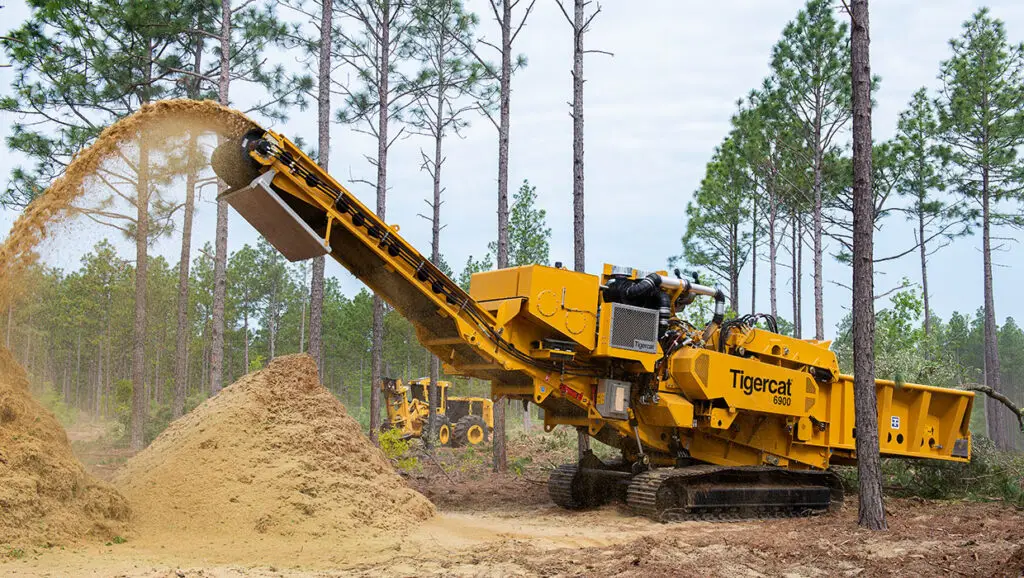
Horizontal grinding is the process of feeding whole trees, stumps, root balls, brush piles, and storm debris into a horizontal grinder — a track-mounted machine built around a 650- to 1,200-horsepower engine turning a steel drum lined with carbide-tipped teeth. Material moves up an enclosed infeed conveyor into the drum, where the teeth tear it apart and discharge it as consistent wood mulch within seconds of contact. That’s a meaningful difference from older tub grinders, which force debris into a rotating tub and can eject material if the tub isn’t kept constantly full — a safety issue that’s gotten tub grinders banned from a growing number of commercial and government projects. The carbide teeth on a horizontal grinder also hold up to the dirt, embedded rock, and roots that come with real land-clearing debris, where a wood chipper’s sharp knives would dull or break. Before you call, the property usually looks like a construction obstacle: a felled-tree pile, a wall of brush, or a yard full of storm wreckage that’s been sitting for weeks. After 3B Site Development’s crew runs it through the grinder, that same footprint is open, gradeable ground with a layer of mulch that can be spread for erosion control or hauled off, whichever the project calls for.
Our Horizontal Grinding Process
Step 1 — Site Walkthrough and Debris Assessment We start with an on-site visit to walk the property, estimate the volume and type of debris — cleared trees, stumps, root balls, storm damage, or construction waste — and check access for track-mounted equipment. This step determines equipment sizing and crew time, so the estimate we give you within 24 hours reflects your actual site rather than a generic per-acre guess.
Step 2 — Debris Staging and Site Prep Our crew consolidates scattered material into manageable piles and clears a path for the grinder, marking any utilities, wells, septic lines, or property features that need to stay untouched. Staging first means the grinder runs continuously once it starts instead of stopping and repositioning, which keeps your project on schedule.
Step 3 — Grinding The horizontal grinder processes the staged debris — logs, stumps, brush, and root balls included — into consistent wood mulch, discharging it via conveyor either into a pile or directly into a truck if you’ve asked for haul-off. Because the equipment is track-mounted, it comes to the debris instead of requiring you to haul material to a yard.
Step 4 — Mulch Placement or Haul-Off Depending on what you need, we spread the ground material on site as mulch for erosion control and weed suppression, or load it out and haul it away, leaving bare, gradeable ground. Either way, you’re not left with a pile of unprocessed debris to deal with on your own.
Step 5 — Final Walkthrough and Site Handoff We walk the finished site with you, point out any grading or drainage considerations for your next phase of work, and confirm the area is clear and usable. What started as a debris pile is now ground you can build on, plant on, or hand off to your next contractor.
Serving Fayetteville and the Surrounding Area
3B Site Development’s horizontal grinding crews work throughout Fayetteville, from Haymount and Westover to Terry Sanford and the Pine Forest area near Fort Bragg, and out along Skibo Road, Raeford Road, and the All American Freeway corridor. The company’s home base in Bunnlevel also puts crews within easy reach of Cumberland and Harnett County properties near Carvers Creek State Park and the Cape Fear River Trail. Fayetteville sits in North Carolina’s Sandhills region, where sandy, well-drained soil is common but can shift to denser clay in low-lying spots — a difference that affects how a track-mounted grinder is staged and how the ground handles once debris is cleared. Whether you’re prepping a wooded lot in Rockfish for new construction or cleaning up storm damage near downtown, 3B Site Development brings the equipment to you.
Many horizontal grinding projects pair naturally with other site work — clearing standing timber first with Land Clearing or Tree & Stump Removal, or mulching brush in place with Forestry Tilling Services when it doesn’t need to be piled and ground. Visit the 3B Site Development homepage to see the full range of site development services available across Central North Carolina.
Why Fayetteville Homeowners & Businesses Choose 3B Site Development
3B Site Development is a family-owned site development company based in Bunnlevel, serving Fayetteville, Raleigh, and the surrounding Central North Carolina region. [VERIFY: confirm current licensing and insurance details for publication — not listed on the company website at time of writing.] The company answers calls seven days a week and commits to turning around estimates within 24 hours, which matters when a debris pile is holding up a construction timeline or a storm has left a property unusable.
Choosing horizontal grinding over open burning also keeps a project compliant without extra paperwork. North Carolina’s open burning rules require land-clearing burn piles to sit at least 500 feet from occupied structures and 250 feet from any public road, restrict burning to Code Green or Code Yellow air-quality days, and generally call for a permit through the North Carolina Forest Service. Grinding sidesteps all of that — there’s no burn permit to secure, no air-quality forecast to check, and no distance restriction keeping a debris pile away from a building or driveway.
That combination of speed, compliance, and cleanup is why property owners across Fayetteville call 3B Site Development for grinding instead of scheduling a burn or renting equipment themselves. Learn more about our team and the site development services we bring to every project.
What Our Customers Say About Our Horizontal Grinding
3B Site Development’s Google reviews don’t yet use the words “horizontal grinding” by name, but customers consistently point to the same land-clearing and debris work this service covers:
“3B Site Development turned our overgrown, cluttered lot into clean, graded ground — the crew was professional, showed up when they said they would, and left the property looking better than we expected.” — Laura Smith
“3B Site Development did great work clearing our land at a great price — we couldn’t be happier with the results.” — Israel Marin
“After getting the run-around from other companies, we found 3B Site Development. Matt and his crew showed up exactly when they said they would and gave us a very fair price to clear our acreage.” — Noelle Penzias
Frequently Asked Questions
What is horizontal grinding, and how is it different from stump grinding or forestry mulching?
Horizontal grinding processes large volumes of piled debris — cleared trees, stumps, root balls, brush, and storm damage — through a track-mounted grinder into consistent mulch. Stump grinding removes a single stump in place with smaller, dedicated equipment, and forestry mulching processes standing brush and small trees to ground level without piling debris first. If you’ve already cleared a lot and have a pile of logs, stumps, and brush left over, horizontal grinding is usually the faster way to deal with it.
Does 3B Site Development haul the mulch away, or is it left on site?
Either, depending on what the project calls for. Ground material can be spread on site as mulch for erosion control and weed suppression, or loaded out and hauled away to leave bare, gradeable ground. We’ll go over both options during the site walkthrough so the outcome matches what you’re building next.
Do I need a permit for horizontal grinding in North Carolina?
No burn permit is required because nothing is being burned. That’s one of the main reasons property owners choose grinding over an open burn: North Carolina’s open burning rules require land-clearing piles to sit at least 500 feet from occupied structures and 250 feet from public roads, restrict burning to Code Green or Code Yellow air-quality days, and generally require a North Carolina Forest Service permit. Grinding avoids all of those restrictions.
How much does horizontal grinding cost?
Cost depends on the volume and type of debris, site access, and how much of the ground material needs to be hauled away versus spread on site. [VERIFY: confirm current pricing structure with 3B Site Development before publishing specific rates.] 3B Site Development provides a written estimate within 24 hours of a site visit so you know the cost before work starts, rather than a generic per-acre number that doesn’t reflect your property.
How long does a horizontal grinding project take?
Timeline depends on the volume of debris and site accessibility for track-mounted equipment. A single residential debris pile can often be processed in a day, while larger land-clearing or storm-cleanup jobs with heavier debris loads take longer. We’ll give you a time estimate along with the cost estimate during the site visit.
What kind of debris can a horizontal grinder process?
Horizontal grinders are built to handle exactly what real land-clearing and storm cleanup produce: whole logs, stumps, root balls, brush, and construction wood waste, even with dirt, embedded rock, or roots attached. The carbide-tipped teeth hold up to contaminated material that would damage a wood chipper’s sharp blades, which is why horizontal grinding — not chipping — is the standard for bulk debris processing.